
Essential advice & information
Organisation
The Way is to be done independently; this website does not promote organised groups nor does it accept requests from those wishing to walk in a group. You can buy the guidebook, study the information on these pages, contact the accommodation providers and set off. The only exception is that, if you wish, Compagnia dei Cammini organises a number of groups throughout the year; find out more here.
Season
The Trail is accessible all year round. The altitudes are never too high, with a maximum of 1,300 metres (apart from the mountain section at Lago della Duchessa, which is a special case), so you can walk it even in winter (perhaps with a pair of snowshoes just in case). Of course, trail maintenance takes place in spring; if there is heavy snowfall in winter, fallen trees may block the trail to some extent. In summer it can get hot, especially if there are unusual heatwaves across Italy, but only during the middle of the day: the area is breezy and shaded.
Signposting
The Cammino dei Briganti is fully signposted, with red-and-white markings and metal plaques bearing the route’s logo. It is important to set off with the guidebook, now in its 7th edition, which contains detailed descriptions, practical information, contact information for the facilities, and stage-by-stage maps; if you want the tracks, they can be downloaded for free from the website. All the work involved in clearing the route and putting up the markings is carried out by volunteers. In the event of snowfall, of course, finding your way becomes more difficult, and the markings may become obscured.
Direction of travel
The route is designed to be walked in a clockwise direction. Those walking it anti-clockwise must be extra careful, especially at junctions, so as not to lose the trail. In this case, we strongly recommend using the GPS tracks.
Stage lengths
Is it possible to combine two stages? We have designed a route with stages of an ideal length to enjoy the walk. The distance may seem short when compared to routes on easy terrain (Santiago, Francigena). But be careful not to underestimate them by combining two stages, because distance isn’t the only factor affecting difficulty. What’s more, by combining two stages, you’d miss out on the beauty of a leisurely pace and stopping in villages to chat with the locals, enjoying the adventure without rushing.
So there’s no point asking us what we think of the idea of combining two stages or whether it’s feasible – we’ll always tell you that we’re against it. The hike isn’t a race; it should be experienced at a leisurely pace, in the here and now, without the anxiety of it getting dark or of arriving completely exhausted. We’ve been walking professionals for 35 years, and we’ve seen all too often that walkers who combine two stages arrive exhausted, stressed and even angry (perhaps because, in their haste, they’d missed a turn-off).
The ‘Friends of the Trail’
In every village along the Cammino dei Briganti there is a ‘friend of the trail’, a volunteer contact who will gladly provide assistance and information to walkers. Obviously, as they are volunteers, they may not always be available; they are not on call 24 hours a day.
But here is the list of the first ‘friends’:
- Nesce: Luca Di Felice 340 8030634
- Villerose: Roberto Gennari 324 0915322
- Torano: Pietro Mattei 349 1969437
- Magliano de’ Marsi: Riccardo Santoponte 347 7910087 and Rebecca Di Cristoforo 328 1155091
- Casale Le Crete: Luca Gianotti info@camminodeibriganti.it
Sleeping in a tent
The Way welcomes those who sleep in tents, but you must be considerate and follow the rules. If many fail to do so, we will be forced to ban this wonderful opportunity.
Rules for those sleeping in tents
As the number of people camping is particularly high in summer, we ask that, wherever possible, you camp in designated areas, farm campsites or similar facilities, which, for a small fee, provide toilet facilities and ensure good hygiene standards. In any case, it is always possible to camp in a tent, even outside designated areas, provided you choose suitable spots (do not pitch tents in villages, but at least 500 metres from houses). It is compulsory not to leave any rubbish behind, such as tissues, and always to bury your waste. You must carry a small, lightweight spade to bury your waste (see this example). Just as they do in Scandinavian and Anglo-Saxon countries. On departure, you’ll be asked to show it in order to receive your pass. No spade, no pass. You’ll find the most well-organised sites that accommodate tents, with up-to-date information, on the Accommodation page.
It is also compulsory to bring your own bowl, cutlery and glass, as, out of respect for the environment, farm campsites no longer serve beer in disposable glasses, nor do they serve barbecued meat on disposable plates and cutlery. Let’s respect the environment!
Otherwise, we recommend you come prepared to sleep in the wild, bringing small water containers to carry water if you’re far from a water source.
If you’re camping freely in the wild, the important thing is to always leave everything spotlessly clean; the impact of walkers must be minimal – let’s leave no trace, thank you! Remember that even toilet paper or tissues must not be left in the wild unless they are carefully buried.
In the Duchessa Nature Reserve (Cartore and Caparnie), if you wish to sleep outside the campsite, you’ll need a permit, which must be applied for in advance by filling in the appropriate form.
Facilities
Water
There is always water in the villages, from springs and drinking fountains. There are also some springs outside the villages: on the second stage between San Donato Castle and Scanzano; on the third stage there are two in Val de Varri… Please note: in summer, the drinking fountains in the villages may be closed in the afternoon, as water is rationed. In this case, please ask the locals politely for some water.
Shops, cafés and restaurants
There are few shops in the villages along the route, which are now very sparsely populated. Here are the villages with a small grocery shop: Sante Marie (closed on Thursday afternoons and Sunday afternoons), Borgorose, Torano, Corvaro, Massa d’Albe, Magliano dei Marsi (a large village with all the shops you need), Scurcola Marsicana. There are cafés or restaurants in: Sante Marie, Santo Stefano, Spedino, Corvaro, Cartore (closed on Mondays, but always open in August), Rosciolo (we recommend Taverna del Velino), Massa d’Albe, Alba Fucens, Magliano (we recommend Da Martino, closed on Wednesdays), Scurcola, San Donato (local tourist office), Scanzano.
There are no cafés or shops in: Valdevarri, Nesce, Poggiovalle, Villerose, Poggetello; therefore, anyone staying in these villages who is not staying in accommodation facilities must make arrangements in advance and do their shopping beforehand.
ATMs
There are no cash machines along the route, apart from in Corvaro, Magliano de’ Marsi and Scurcola, and a Postamat in Sante Marie; only a few establishments accept card payments. You will therefore need to carry cash.
Pharmacies
There are pharmacies in Sante Marie, Corvaro, Magliano de’ Marsi, Massa d’Albe and Scurcola.
Organised groups
Compagnia dei Cammini (www.cammini.eu) organises groups on the Cammino dei Briganti on fixed dates, which you can find in the calendar on the website mentioned above.
Museums
Museum of Brigandage
In Sante Marie, before setting off on the trail (or on your return), you can visit the Museum of Brigandage. To arrange a visit, please contact the Credential office or the mayor directly (mobile: 339 2301774). Here are the museum admission prices for 2026: €3 per person.
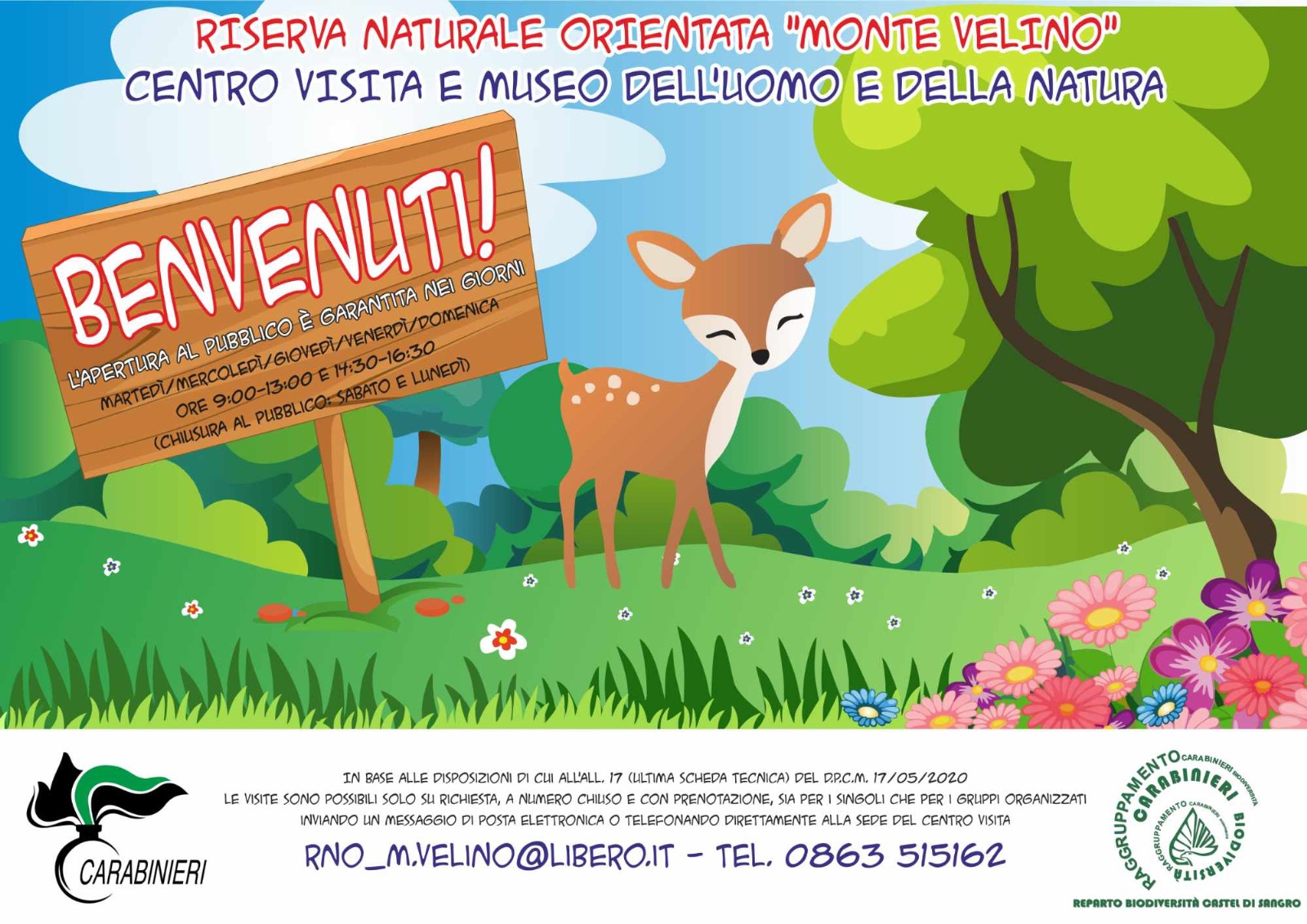
Museum of Man and Nature
The Museum of Man and Nature at the Monte Velino State Nature Reserve has reopened. The trail passes right in front of it along Stage 6, just before entering Magliano dei Marsi. It is located within the visitor centre run by the Forestry Carabinieri. Visits are by booking only (due to Covid), from Tuesday to Sunday. See the attached leaflet for further information.
Collaborations and support
The Cammino dei Briganti relies on the voluntary work of a small group of people, who put in a great deal of effort each year to clear the paths – which, at these altitudes, become overgrown with brambles, weeds and shrubs – and to mark the paths with paint, covering all the costs (paint, brushes, petrol, tools, etc.). We ask everyone to help out in whatever way they can. Anyone walking along the trail is invited to help keep it clear by picking up any litter, and above all by carrying a pair of pruning shears to cut back any overgrown sections. Thank you!
Walking with your dog
Most establishments, some more willingly than others, welcome dogs, but it is essential that you make arrangements in advance and that your dog is well-behaved and clean to ensure it is welcome.
Danger of sheepdogs
This route passes through areas that have been used for sheep farming for centuries, so it is easy to come across sheepdogs guarding the flocks. If you’re afraid of dogs, bear this in mind. They are Maremmano-Abruzzese sheepdogs, large white dogs. How should you deal with them if they approach you barking? Read the ‘Cammino dei Briganti’ guide carefully; on page 19 there’s a section on how to behave to pass by unscathed.
And listen to this interview with Tomas Pirani, one of Italy’s leading experts on canine behaviour, a ‘dog anthropologist’ and a student of Roberto Marchesini, with whom he works at the University of Bologna. Here is the interview. And here is a very interesting webinar by Tomas Pirani on guard dogs.
Some people write to us asking for the herding dogs to be removed because they are a nuisance to walkers. This is the wrong attitude; herding dogs are here to do their job; they are part of Abruzzo’s cultural heritage; they were here before the trail existed, and we want to defend them because they are part of that heritage. It is the walkers who must tread lightly here, respecting the local culture and learning to manage situations and fears by finding out how to behave. Thank you.
Recommended equipment
Many people are on their first hike and ask us for advice. For tips on equipment, we recommend Luca Gianotti’s page dedicated to this topic. You’ll find plenty more advice in the book The Art of Walking: Tips for Getting Off on the Right Foot, also by Luca Gianotti (Ediciclo).